
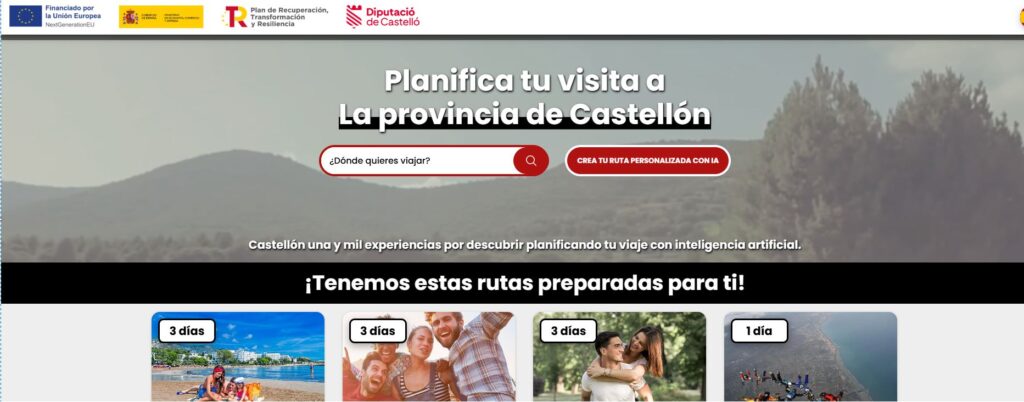
Cicerone promotes smart tourism in Castellón
- Date Created: 12/17/2024
Problems to be solved
- Fragmentation of the tourist experience: Visitors needed more personalized and accessible attention, especially outside office hours.
- Lack of data for decision making: Tourism strategies lacked detailed information on visitors, their interests and consumption patterns.
- Inefficient resource management: Tourism staff overloaded with operational tasks, leaving little room for innovative strategies.
- Lack of sustainability: The traditional model generated a high carbon footprint by relying on physical offices and printed materials.
What the project consists of
The Castellón Provincial Council has implemented a comprehensive smart tourism system based on the Cicerone platform, designed to accompany visitors before, during and after their stay.
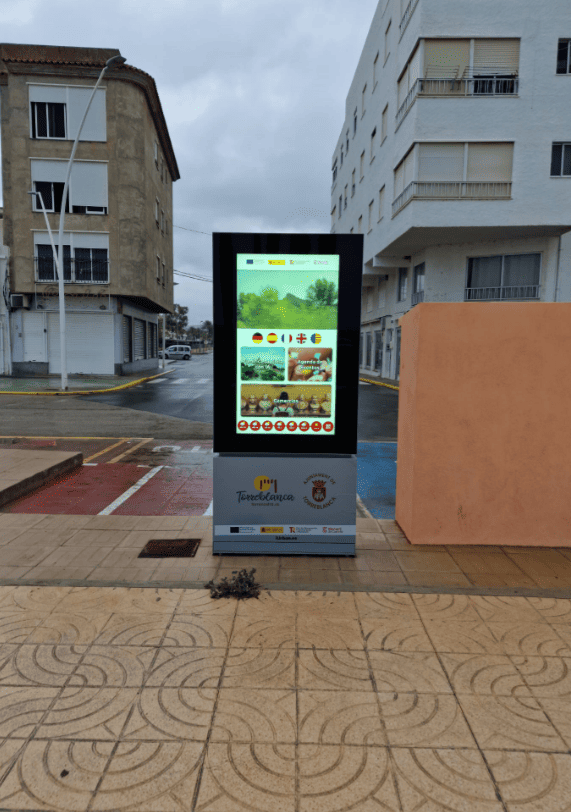
Key project components:
- Interactive totems (12 units): Equipped with accessible technology to offer 24/7 attention at strategic points.
- Personalized QR codes: Generated for thematic routes, local resources and business promotion without the need for downloads.
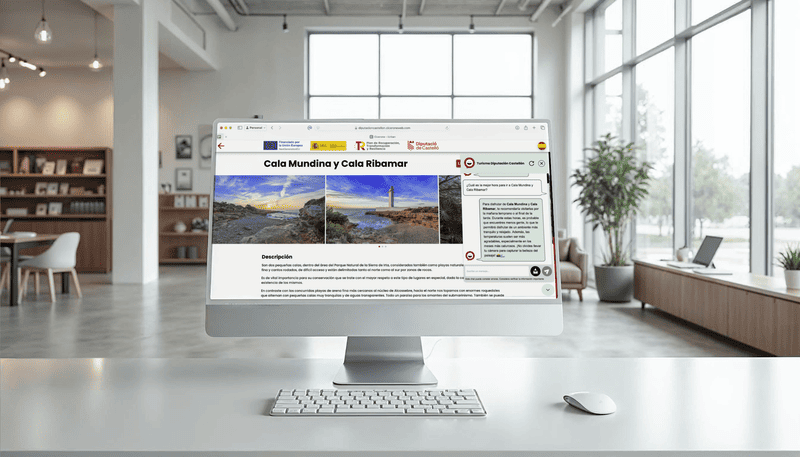
- Multilingual web portal: Accessible in 95 languages, allowing personalized and sustainable planning.
- Data analysis modules:
- Behavior: Interests and perceptions about safety, satisfaction and tourism products.
- Air connectivity: Flight availability and demand trends.
- Lodging: Prices, satisfaction and availability of hotels and vacation rentals.
- Telecommunications: Visitor mobility and geographic origin.
- Spending: Consumption patterns and average ticket by category.
Results obtained with Cicerone in Castellón
Increased tourism:
- +18% of international visitors in the last 6 months.
- Thematic routes such as Peñíscola-Moncofa have invigorated the lesser-known municipalities.
Increased visitor satisfaction:
- Tourist satisfaction index: 92% (+12 points over the previous year).
Reduced waiting time in physical offices
- Reduction of waiting time in physical offices by 70% thanks to totems with adaptive tools and inclusive technology.
Carbon footprint reduction:
- Elimination of 100% of printed material in the participating municipalities.
- Reduction of unnecessary travel, avoiding 10 tons of CO₂ in one year.
Adaptation to SEGITTUR's DTI strategy
The project is fully aligned with the pillars of the Smart Tourism Destinations (DTI) strategy, promoted by SEGITTUR:
- Sustainability: Reduction of emissions and elimination of physical materials.
- Innovation: Use of generative artificial intelligence for tourism analysis and service.
- Accessibility: Totems with adaptive tools and inclusive technology.
- Efficient management: Real-time data analysis for evidence-based decisions.
- Connectivity: Use of digital tools such as web portals and QRs for a seamless experience.
Conclusions for other county councils and groupings
- Scalability: This model can be easily adapted to any territory, integrating small and large municipalities in a common strategy.
- Profitability: The initial investment is quickly recovered thanks to the positive economic impact on local commerce.
- Sustainability: The results demonstrate that it is possible to implement technology without compromising the environment.
- Technological inclusion: This system ensures that all municipalities, regardless of their resources, benefit equally from innovation.
Do you want to lead change in your province?
Transform the tourism experience in your region with Cicerone, the solution that connects technology, sustainability and local development. Click on the button below for more information.

